
Tutorela in a snapshot
Tutorela is a private tutoring marketplace for students and families in the United States, covering every subject and age. It is the international brand of a platform that has run for over 15 years, with 500,000+ lessons and 15,000+ approved tutors.
- Free to contact tutors: no subscription or pass is needed to message a tutor.
- No extra fees for students: you pay the tutor's rate, with no service fee or platform fee on top. Tutorela takes a low commission from tutors compared with the market, so tutors can price fairly.
- Flexible payment: students pay the tutor directly or by credit card, lesson by lesson. No package or membership is ever required.
- Every subject, every age: from elementary school through college prep and adult learning.
- Tutor and AI together: a real tutor leads the learning, while AI is designed to support practice between lessons and show the tutor where a student got stuck.
- Independent: Tutorela is self-funded, not backed by venture capital.
Finding a private tutor online should be the easy part. In practice, students and parents keep running into the same walls: a fee just to send a message, extra fees stacked on top of the tutor's rate, monthly plans that are hard to cancel, and sites built around a single subject.
Tutorela is new to the United States, but we are not new to tutoring. Tutorela is the international brand of a tutoring marketplace our team has run for over 15 years, with more than 500,000 lessons and 15,000+ approved tutors. Before launching here, we researched what frustrates students and parents in the US most when they look for a tutor. Every decision below answers one of those findings.
Below are the six biggest pain points our research found, and the choice we made for each. For every one we point to a well-known platform where that pain point shows up. The goal is not to knock anyone (each of these platforms does plenty well, and we say where), but to show clearly why Tutorela works the way it does. Competitor details are accurate as of October 2026. Platforms change their terms, so check the current version before you sign up anywhere.
| What students need | What they often find elsewhere | How Tutorela handles it |
|---|---|---|
| Talk to a few tutors before choosing | A monthly pass just to send a message | Messaging tutors is free |
| Know the real price | A service fee added on top, or high commissions that push tutors' rates up | No fees on top for students, and a low commission for tutors |
| Pay only for lessons taken | Required memberships and packages | Pay the tutor directly or by card, lesson by lesson |
| One place for every subject | Platforms built mainly around languages | A multi-subject marketplace for every age |
| Help between lessons that actually teaches | AI on its own, with no one to catch its mistakes | A real tutor and AI, working together |
| Rules that stay simple | Pricing tied to investor growth plans | Self-funded and independent |
In this article
1. Messaging a tutor is free
Before you commit to a tutor, you want to talk to a few of them: ask about their experience, check their availability, and get a sense of whether they will click with you or your child. That first conversation should not cost anything.
Where it shows up: Superprof. On Superprof, students in the US need a Student Pass, currently $49 per month, before they can message tutors. Kept active for a full year, that would come to $588 before a single lesson, as tutors on Reddit have pointed out. The pass renews every month until you cancel it, and it does not cover the lessons themselves.
The subscription comes up again and again in Superprof's Trustpilot reviews, where reviewers say they did not realize it was a recurring charge. Outside the US, where the price differs, the experience sounds similar: on Reddit, one student in Canada wrote that they were charged $39 just to message a tutor, before booking anything, and language learners have asked why they are asked to pay before contacting anyone.
Where they shine: Superprof covers a very wide range of subjects, and many of its tutors offer a free first lesson.
How Tutorela does it. There is no subscription and no fee to make contact. You can browse profiles, read reviews and message as many tutors as you like. Say you need a private Spanish tutor before a semester abroad: message three of them, compare how they would prepare you, and book the one whose answer fits. You pay for lessons, not for permission to ask a question.
2. No extra fees for students, and a fair deal for tutors
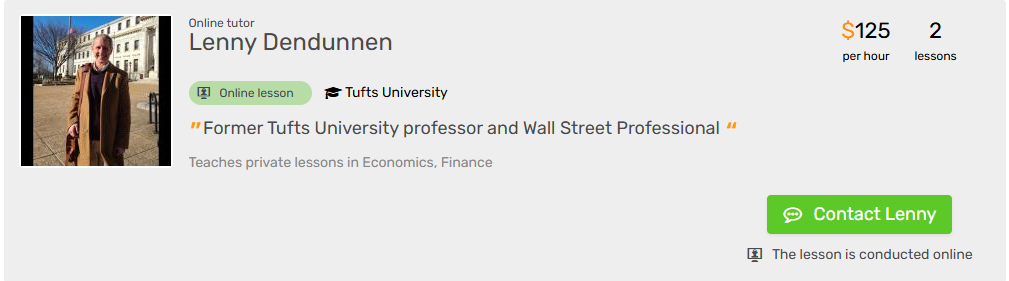
When you book a lesson on Tutorela, the price on the tutor's profile is the price you pay. There is no service fee, booking fee or platform fee added on top. And because the commission we take from tutors is low compared with the market, tutors can set rates that are fair for students and still worth their time.
| Platform | What students pay on top of the tutor's rate |
|---|---|
| Tutorela | Nothing. You pay the tutor's rate. |
| Wyzant | A 9% service fee on every lesson |
| Superprof | A monthly Student Pass ($49 in the US) just to contact tutors |
Where it shows up for students: Wyzant. On Wyzant, students pay a 9% service fee on top of each lesson, as tutors on Reddit explain. On a $60 lesson, that comes to about $65.40. As of October 2026, Wyzant holds a 1.6 out of 5 rating on Trustpilot, where many reviewers mention unexpected charges and fees. Review sites reflect the people who choose to post, so read them as experiences, not as a survey.
Where it shows up for tutors: Wyzant and Preply. Commissions on the tutor side matter to students too, because they shape what tutors need to charge. On Wyzant, tutors keep 75% of their rate under the standard fee (tutors who bring in their own students can keep their full rate on those lessons). On Preply, the student pays for a trial lesson with each new tutor, but the tutor earns nothing for it, and the commission on later lessons starts at 33%, dropping step by step to 18% only after a tutor has taught more than 400 hours (here is how that adds up). A tutor who gives up a quarter or a third of every lesson has two choices: earn less, or charge more.
For reference, here is how standard tutor commissions compare (as of October 2026):
| Platform | Commission from the tutor | First lesson with a new student |
|---|---|---|
| Tutorela | 20%, the same for every tutor | 20% |
| Wyzant | 25% standard fee | 25% |
| Preply | 33% for new tutors, dropping to 18% only after 400+ hours of teaching | 100% goes to Preply |
On top of Tutorela's 20% commission, a credit card or PayPal processing fee may apply when a lesson is paid that way. It is set by the payment provider and outside our control, but we want to be upfront about it.
Where they shine: Wyzant moved in 2019 from a sliding scale that started at 40% to a single flat fee, a real step toward transparency. Preply's model rewards tutors who stay on the platform for the long run.
How Tutorela does it. Students pay the tutor's rate and nothing more. On the tutor side, we take a flat 20% commission, low compared with the market and the same for every tutor and every lesson, including the first, with no teaching-hours milestones to reach. That lets tutors price themselves fairly: competitive for students, and still rewarding for them.
Why it matters to you. The price you see is the price you pay, with no surprises at checkout. And a tutor who keeps more of every lesson can set a fair rate without cutting corners. We believe a deal that works for both sides is what keeps a marketplace healthy, for tutors and students alike.
3. Pay your tutor the way that works for you
Students and parents want three things from payment: to see the price before they start, to pay only for the lessons they take, and to be able to stop whenever they want.
Where it shows up: Varsity Tutors. Varsity Tutors sells tutoring mainly as monthly memberships. That model sits at the heart of the business: in the fourth quarter of 2025, 85% of revenue at Nerdy, the company behind Varsity Tutors, came from its Learning Membership subscriptions. A membership is convenient when everything goes well, and harder to step away from when it does not.
Some customers have described exactly that. On Reddit, one user wrote that they could not cancel online and had to call customer service after the charge had already gone through. In Google reviews of Varsity Tutors Houston, parents write about feeling pressured to buy a package upfront.
Where they shine: As of October 2026, Varsity Tutors holds a 4.3 rating from more than 13,000 Trustpilot reviews, and parents often praise the tutors themselves. The complaints that do appear often involve unexpected monthly charges. As with any subscription, it is worth reading the cancellation terms before signing up.
How Tutorela does it. Every tutor's rate is right on their profile. You book a lesson and pay the tutor directly or by credit card, one lesson at a time. There is no recurring membership to cancel; each lesson simply follows the tutor's own cancellation terms. If we offer lesson packages, they will always be optional: a way to pay less per lesson if you want it, never a requirement. And if a tutor is not the right fit, you simply choose another one from the whole marketplace.

4. Every subject, every age, one place
Families rarely need just one tutor. A younger child might need help with reading, an older one is preparing for AP exams, and a parent wants to brush up on a language. Finding tutors across different platforms adds complexity families do not need.
Where it shows up: Preply and Cambly. Some platforms cover many subjects (Wyzant and Superprof among them), while others are built around languages. Preply lists more than 120 subjects, but it describes itself as a language learning platform, and its homepage is built almost entirely around languages. Even its $150 million funding round in January 2026 was framed around language learning. Cambly focuses on English conversation only.
Where they shine: If a language is all you are after, that focus is a real strength, and both platforms offer a large pool of language tutors.
How Tutorela does it. Tutorela was built as a multi-subject marketplace from day one, from elementary school through college prep and adult learning, and it pairs that range with everything above: free messaging, no fees on top of the tutor's rate, and lesson-by-lesson payment. A high schooler stuck on stoichiometry can find a private chemistry tutor, and a student who wants to build a first app can work with a computer science tutor, all through the same subject search.
5. A real tutor and AI, working together
Students need help between lessons too, and AI is good at a lot of it: it is available at 11 p.m., endlessly patient, and fast. On its own, though, it has limits that matter for learning.
Where it shows up: Chegg. Chegg built a homework-help business largely around ready-made answers, and free AI chatbots put that model under heavy pressure. Chegg lost more than 500,000 subscribers after ChatGPT launched and announced cuts affecting 45% of its workforce in October 2025, according to Forbes, which also points to falling search traffic as AI summaries answer questions directly. Answer-focused services face growing competition from tools anyone can use for free.
Where it shows up: AI-only tutors. Khanmigo, the AI tutor from Khan Academy, is one of the most carefully designed AI tutors for kids. Even so, when the Wall Street Journal tested it in February 2024, it struggled with basic math: it miscalculated simple subtraction, answered "Excellent!" to a wrong answer, and pushed back on a correct one. With no teacher in the loop, a student who is still learning the material may not recognize when the AI gets it wrong.
Even when the math is right, AI alone can backfire. In a study of nearly a thousand high school math students published in PNAS in 2025, students who practiced with an unrestricted GPT-4 assistant scored 48% higher during practice than students without AI, but 17% lower on an exam taken without it (both relative to that group). They had leaned on it instead of learning. A second version, built to guide students rather than hand them answers, improved practice scores by 127% and largely avoided that drop. How AI is built into learning matters as much as whether it is there.
Where they shine: Khan Academy has been open about Khanmigo's limits and has since improved its math tool, including sending number problems to a calculator. And the wider market is reaching the same conclusion we did: Nerdy, the company behind Varsity Tutors, is building a "Live+AI" platform to make its tutors more effective.
How Tutorela does it. The answer is not tutor or AI. It is both, each doing what it does best. Our approach connects learning on Tutorela in three layers:
- Practice: a library of exercises students can work through on their own.
- AI guidance: an AI layer designed to guide students step by step instead of handing out answers, at any hour, and to show the tutor where they got stuck.
- The lesson: a private lesson with a tutor who starts from exactly the right place.
Each side covers the other's blind spots. The AI gives students help whenever they need it and gives the tutor a clear picture of the week. The tutor catches what the AI gets wrong, explains the why, and makes sure the student is thinking rather than copying. A private physics tutor who already knows which problems tripped you up during the week can spend the lesson on what is actually hard, instead of on review. Together, they do what neither can do alone.
6. Independent, so we can keep it simple
Most of what you have read above comes down to one decision: Tutorela is self-funded, not backed by venture capital.
Where it shows up: Preply and Nerdy. Preply raised $150 million at a $1.2 billion valuation in January 2026. Varsity Tutors is part of Nerdy, a company listed on the New York Stock Exchange that reported a $14.0 million net loss in the fourth quarter of 2025.
Investment is not a bad thing. It builds products and pays for growth, and outside investors naturally expect that growth. Independence does not automatically make a platform better, but it does give us the freedom to make long-term product and pricing decisions on our own terms.
How Tutorela does it. We answer to the students and tutors who use the platform, and we have used that freedom to keep our model simple: free messaging, no fees on top for students, a low commission for tutors, and no required subscriptions.
New to the US, not new to tutoring
Every choice in this article came from the same place: research into what frustrates students in the US most, read through more than 15 years and 500,000+ lessons of running a tutoring marketplace. Tutorela is our answer to those findings, built for families in the United States.
Ready to find your tutor? Browse tutors by subject and message as many as you like. It is free.
Find a tutorFAQ
Does it cost anything to contact a tutor on Tutorela?
No. Browsing profiles, reading reviews and messaging tutors are all free. There is no subscription. You pay only for the lessons you book.
Do students pay any fees on Tutorela?
No. You pay the tutor's rate for each lesson, with no service fee, booking fee or subscription added. Tutorela earns a flat 20% commission from tutors, lower than the standard rates of other major platforms, so tutors can keep their rates fair.
How do I pay my tutor?
You can pay your tutor directly or by credit card, one lesson at a time. No package or membership is ever required. If lesson packages are offered, they are optional and lower the price per lesson.
How do I choose the right tutor?
Start with the tutor's profile: their experience, the subjects they teach, their hourly rate and reviews from other students. Then message a few tutors for free, ask how they would approach your goals, and book the one whose answer fits. If it is not working out, you can switch to another tutor at any time.
Is Tutorela only for math?
No. Tutorela is a multi-subject marketplace for every age, from elementary school through college prep and adult learning, including science, languages, history and computer science.
Does AI replace the tutor on Tutorela?
No. Tutorela combines the two. AI is designed to guide students through practice between lessons and show the tutor where they got stuck, while the tutor checks the work, explains the why, and leads the lesson. Together they do what neither can do alone.