
The short version
- The hourly rate is only one number. Fit, a clear plan and real progress decide what tutoring actually costs you.
- Great tutors exist at every price point, and a higher rate doesn't guarantee better teaching.
- Use reviews, the tutor's profile and a first conversation to judge fit.
- Agree on a goal, an initial block of lessons and a review point, then check progress against where your child started.
In this article
- Why the hourly rate isn't the whole story
- What can make tutoring cost more than the rate
- Think in cost per goal, not cost per lesson
- How to choose the right tutor on Tutorela
- How to tell if a tutor is a good fit
- Choosing a tutor within your budget
- How to make sure your child is making progress
- The golden rule
- Frequently asked questions
Why the hourly rate isn't the whole story
When you start looking for a tutor, the price is the first thing you see, and it's the easiest thing to compare. But it tells you very little about whether a tutor will work for your child. An affordable tutor can be exactly the right fit, and a more expensive one can be the wrong one.
Tutorela is the international brand of a tutoring platform with more than 15 years of experience matching families with tutors, and today we focus on families in the United States. The platform has hosted over 500,000 lessons with more than 15,000 approved tutors. The advice in this guide comes from that experience: the questions that help a family choose well are about fit, plan and progress, and price is one input among them.
What can make tutoring cost more than the rate
Whatever the hourly rate, a tutor who isn't the right fit for your child can bring costs that never show up on the profile:
- More sessions than planned: without a clear plan, it can take longer to cover the same ground.
- Retaking a test: registering for the SAT again costs $68, plus $38 if you register late (College Board), on top of more prep sessions. Eligible students can get SAT fee waivers.
- Switching tutors mid-way: a new tutor usually needs some time to assess your child's level and adjust to how they learn. That time is useful, but it may add sessions to the plan.
- Time and stress: weeks of lessons that don't move the needle wear down both the student and the parent.
What affects the price of a tutor
Rates depend on the subject, the tutor's experience, the lesson format and where you live. Test prep usually costs more than regular subject tutoring, and rates in large cities tend to run higher than in smaller towns. A lower rate can also simply mean a tutor is new to the platform and building their reviews, not that they're less skilled.
On Tutorela, each tutor's rate appears on their profile, so you can compare prices, experience and reviews side by side before you book.
Think in cost per goal, not cost per lesson
The useful question isn't "how much is one lesson?" but "what will it take to reach our goal, and what does that add up to?" That depends on the tutor's plan as much as on the rate.
Example: preparing for the SAT
The numbers below are a made-up illustration, not market data. Two tutors propose a plan for the same student, with one-hour sessions:
| Tutor A | Tutor B | |
|---|---|---|
| Hourly rate | $40 | $75 |
| Initial preparation sessions | 16 | 10 |
| Initial plan | $640 | $750 |
| If a retake is needed: 6 more sessions + $68 fee | +$308 | +$518 |
Tutor B's rate is almost double, but the plans are only $110 apart. Either tutor could need extra sessions, and nobody can promise a score. So the choice shouldn't come down to the rate alone: it also comes down to which tutor's plan makes more sense for your child, and which one your child will actually work well with.
Before you book, ask each tutor how many sessions they expect, what the plan covers, and when you'll check progress together.
How to choose the right tutor on Tutorela
Say your child is a sophomore struggling through a tough semester and you're looking for a private chemistry tutor, or a junior with an AP exam coming up who needs a history tutor. Either way, start with the tutor's profile, and look at any reviews and rating it has. Tutors who are new to Tutorela may not have reviews or a rating yet. Our new subject search also lets you narrow tutors by level and topic, so you only compare tutors who teach what your child actually needs.
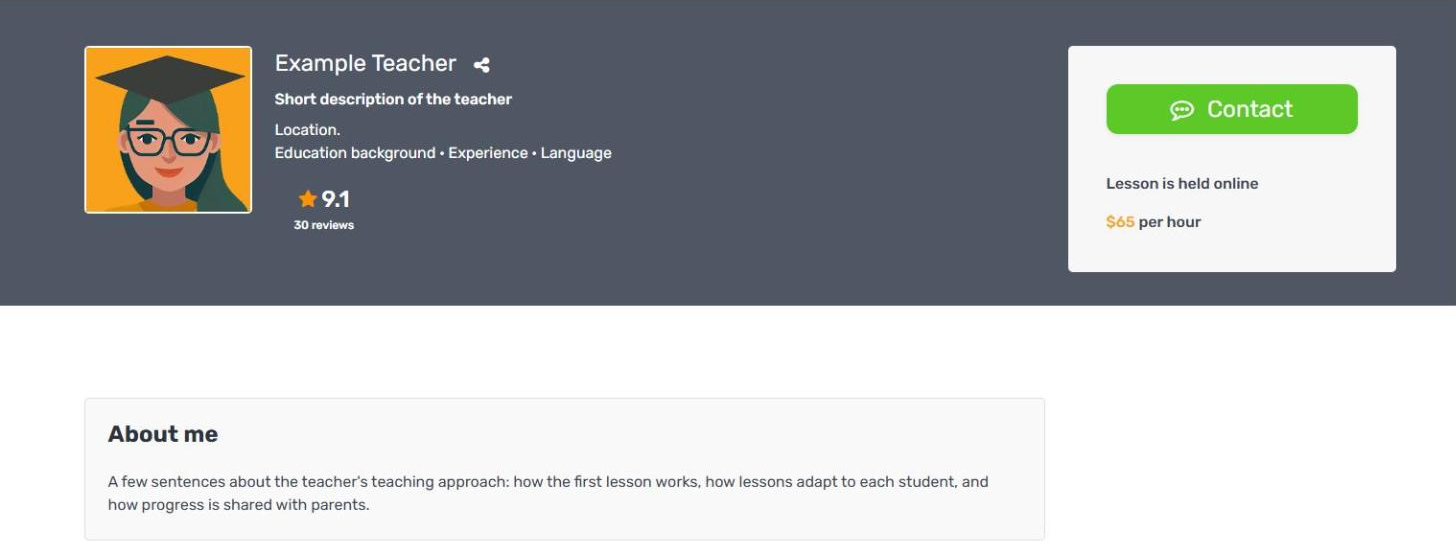
How to read reviews from past students
Helpful reviews
- Explain why the tutor helped, not just "great tutor!"
- Mention concrete progress, like a better grade or a higher practice-test score
- Come from students with a similar age and goal to your child's
- Describe how the tutor teaches
Less helpful reviews
- Short and generic, with no details
- Say nothing about progress or results
- Come only from students very different from your child (for example, adult learners when you need help for a 9th grader)
Few or no reviews isn't a warning sign on its own, and it doesn't necessarily mean the tutor is new. Some experienced tutors simply haven't been reviewed on Tutorela yet. In that case, a first conversation or trial lesson tells you more than the review count. You can also ask the tutor to put you in touch with a past student or parent, so you can hear about them directly.
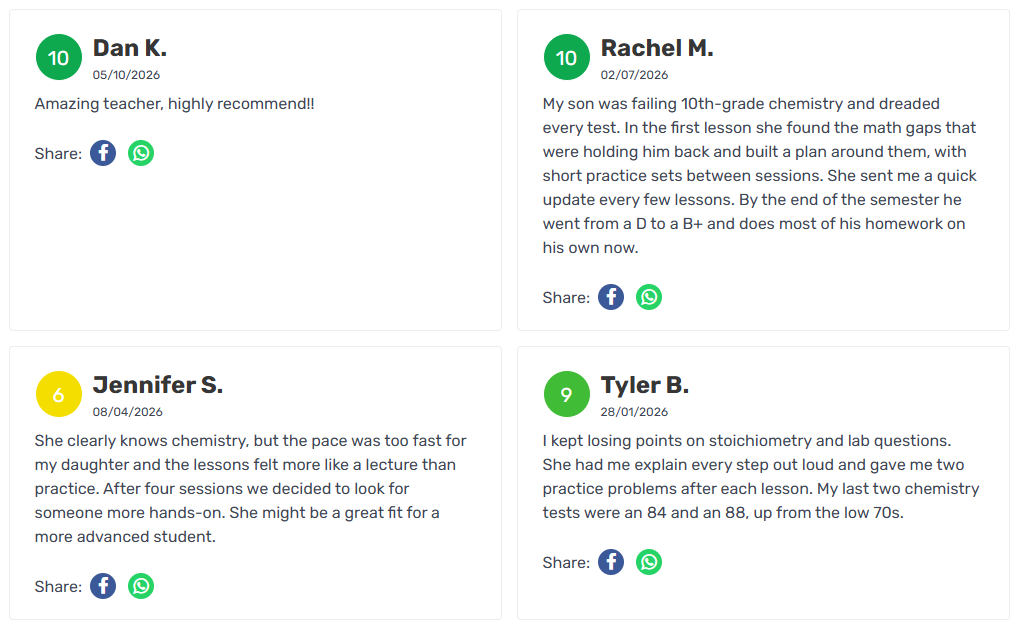
How to read a tutor's profile
| Profile field | Encouraging sign | If you see this, ask |
|---|---|---|
| Teaching approach | Explains how lessons adapt to each student | Only generic lines: how would they work with your child? |
| Experience | Years of teaching, on Tutorela or elsewhere | New to Tutorela: where and whom have they taught before? |
| Subjects | Clear subjects and levels they focus on | A long list: which do they teach most often? |
| Age range | Experience with your child's grade level | A wide K–12 range: who have they taught recently at your child's level? |
| Availability | Hours that match your schedule | Flexible hours: can you keep a consistent weekly slot? |
How to read a tutor's rating
Once a tutor has received reviews, their profile shows a rating on a 1 to 10 scale. Read it together with the reviews behind it: a 9.4 from 40 detailed reviews tells you much more than a 10 from two, and no number can tell you on its own whether a tutor suits your child.
A tutor without a rating hasn't received reviews yet. They may be new to Tutorela, or their students simply haven't left reviews so far. In both cases, a first conversation tells you more than the missing number.
How to tell if a tutor is a good fit
The first conversation with a tutor tells you a lot, at any price. Encouraging signs:
- They can describe their teaching method in a sentence or two
- They ask about your child's goal, level and what hasn't worked so far
- They propose a plan, with a rough number of sessions and a point to review progress
- They explain how they check that your child understood, not just that the material was covered
- They communicate clearly and get back to you in reasonable time
Real warning signs
- They can't explain how they teach
- Communication is unclear or slow before you've even started
- No plan for checking understanding or progress
The right questions to ask
- "How have your past students done on this test or in this class?"
- "How many sessions do you expect we'll need, and when should we review progress?"
- "How do you measure progress?"
- "What do you do when a student doesn't understand something?"
A good tutor will answer these with specifics. Vague answers are a signal to keep looking. Once you've found a good fit, here's how to prepare your child for their first lesson.
Choosing a tutor within your budget
A lower-cost tutor can be the right choice at any grade level and for any subject, as long as the tutor fits what your child needs. When you compare a few tutors, look beyond the rate:
- Lesson length: is a lesson 45, 60 or 90 minutes?
- Cancellation policy: what happens if your child is sick or has a game?
- Packages and commitments: is there a discount for a package, and do you have to commit up front?
- Support between lessons: can your child send a quick question before a test?
- A monthly budget you can sustain: steady weekly lessons usually help more than a burst you can't keep up.
How to make sure your child is actually making progress
Choosing the right tutor is only half the job. The other half is checking that the lessons are working.
Signs of healthy progress
- Grades or practice scores improving compared with where your child started
- Your child handles homework more independently
- A better attitude toward the subject
- The tutor gives you specific feedback, not just "it's going well"
Set a review point: agree with the tutor on a check-in after an initial block of lessons, for example 4 to 6. If you don't see progress toward the goal, talk about adjusting the plan, and if nothing changes, consider someone else. Not sure whether it's time? These 10 signs your tutor isn't the right fit can help you decide.
How to measure progress objectively
- A practice test every few lessons (for the SAT, the free full-length practice tests on Bluebook work well)
- A short progress log you and the tutor update together
- A check-in with your child's teacher at school
- Homework your child solves without help
The golden rule for choosing a tutor
Alongside comparing hourly rates, plan around the goal:
- Define the goal: a grade, a score, or confidence in a subject.
- Agree on an initial block: how many sessions, and what they'll cover.
- Set your budget: one you can keep up for the whole block.
- Review progress together: at the agreed point, decide whether to continue, adjust or switch.
Don't only ask: who's the cheapest per lesson?
Ask: who's the best fit for this goal, within our budget?
Ready to start? Search for your child's subject, for example a physics tutor for a student heading into AP Physics, and compare a few profiles side by side.
Find a tutorFrequently asked questions
What affects the cost of a private tutor?
It varies by subject, location, lesson format and the tutor's experience, and test prep usually costs more than regular subject tutoring. Compare the cost of the whole plan, not only the hourly rate.
How can I tell if a tutor will actually get results?
Ask about past students' progress, read detailed reviews from other parents, and check whether the tutor proposes a plan and a clear way to track progress.
What if we're on a tight budget?
Affordable tutors can be an excellent fit. Compare session plans, ask about packages and online lessons, and consider fewer, focused sessions with independent practice in between.
What does it cost to retake the SAT?
Registration is $68, plus $38 for late registration, and usually more prep sessions before the new date. Eligible students can get SAT fee waivers from the College Board.
How should I read a tutor's rating on Tutorela?
Read the rating together with the reviews behind it. A number alone can't tell you whether a tutor suits your child. Tutors get a rating only after they receive reviews, so a tutor without one may be new to the platform or simply hasn't been reviewed yet. You can also ask the tutor to put you in touch with a past student or parent.
Is a more expensive tutor always a better tutor?
No. Price alone doesn't tell you much. Check reviews, the profile and the tutor's plan for your child.
How soon should we see progress?
Agree on a review point with the tutor, for example after 4 to 6 lessons, and measure progress against your child's starting point and goal.
Remember: the right question isn't "how much does a lesson cost?" but "what will it take to reach our goal, and is this the right tutor for it?"