
Online tutoring went from a niche option to a mainstream one in just a few years. For some students it's the best way to learn. For others, a tutor in the room is still the better fit. This guide walks you through who does well online, where in-person lessons still win, and how to set up online lessons so they actually work.
In short
- About half of private lessons now happen online. On Limud Naim, the tutoring marketplace run by the team behind Tutorela, online lessons grew from about 10% of all lessons in 2019 to about 50% in 2025.
- Who it suits best: high school students, shy or introverted students, busy students who need flexible scheduling, and families far from strong local tutors.
- The upside: no commute, a much wider choice of tutors, and the option to record lessons and review them later.
- The downside: you depend on technology, it's harder to build a personal connection through a screen, and hands-on subjects are a poor fit.
- The research: in a randomized trial in Spain, students who got online math tutoring scored higher on standardized math tests and earned better math grades than students who didn't.
In this guide
Why we wrote this guide, and what changed in private tutoring
Tutorela is the international brand of a tutoring platform whose team has been connecting students with private tutors for over 15 years, first in Israel through Limud Naim and now with a focus on families in the United States. Every day we see parents struggling to choose the right tutor. Some pick a tutor who isn't the right fit and stop after a few lessons, wasting time and money. Others simply aren't sure whether online lessons will work for their child. This guide is here to help you make that call.
10% → 50%
The share of private lessons held online on Limud Naim, Tutorela's sister marketplace, between 2019 and 2025.
Source: Limud Naim platform data
Not long ago, a private lesson through a screen sounded strange to most parents and tutors. "How can anyone teach a kid through a computer?" many parents asked. "My child needs someone sitting right next to them."
Then came 2020. The COVID-19 pandemic forced everyone to adapt, and it turned out that online learning wasn't just possible. It could also work well. Today about half of the private lessons on our sister platform happen online, and that's no accident.
What the research says: a randomized trial of online tutoring
A 2024 study published in the Journal of Public Economics put a fully online math tutoring program to the test in Spain. Researchers randomly assigned 375 7th and 8th graders from disadvantaged neighborhoods to either get tutoring or not. For eight weeks, the tutored students met online after school, two at a time, mostly with qualified math teachers. The main findings:
- Higher test scores: tutored students scored 0.26 standard deviations higher on standardized math tests, a large effect by education-research standards.
- Better report cards: their end-of-year math grades rose even more, by 0.49 standard deviations.
- Fewer students held back: tutored students were less likely to repeat the school year, and they reported higher aspirations and more effort at school.
Even with two students per tutor, the program produced results similar to those of one-on-one tutoring.
What drove the shift?
Three main forces turned online tutoring from a fallback into a first choice:
- The COVID-19 pandemic (2020). This was the biggest turning point. Before 2020, many families saw online lessons as a second-rate option. Once they were pushed to try it, they discovered it works. Parents and students got comfortable with the technology and found they could learn effectively through a screen.
- Better technology. Faster internet, reliable video platforms and digital whiteboards made online lessons simple. What used to require complicated setup now works with one click.
- Growing evidence. Rigorous research keeps finding that tutoring works. A 2024 review of 265 randomized studies of tutoring, by researchers at Brown University and the University of Virginia, found that only a handful of those studies looked at online tutoring, most of them recent. Online programs showed smaller effects on average, but once the researchers accounted for other differences between programs, the gap was no longer statistically significant. Their reading: the evidence suggests online tutoring can be effective when it's well designed.
Who is online tutoring right for?
The numbers show a clear trend, but the question that matters is simpler: is it right for my child?
There's no one-size-fits-all answer. Some parents heard great things about online lessons, tried them, and found their child just couldn't focus. Others were sure their kid "needs a tutor in the room" and watched them thrive online. So instead of a blanket recommendation, here are the student profiles we see most often. Find the one that sounds like your child.
Shy or introverted students
Students who hesitate to ask questions in class, or who feel uncomfortable face to face, often blossom in online lessons. The screen creates a "safe distance" that helps them relax. Being able to type a question in the chat instead of saying it out loud can make a big difference.
That comfort often grows into confidence. A student who feels safe asking questions tends to participate more, speak up sooner and take on harder material.
Students with packed schedules
Athletes, students in demanding arts programs, and kids juggling a part-time job all benefit from the flexibility of online lessons. There's no driving across town, lessons can happen from anywhere, and suddenly great tutors from all over the country are within reach.
A real success story: six years of online tutoring
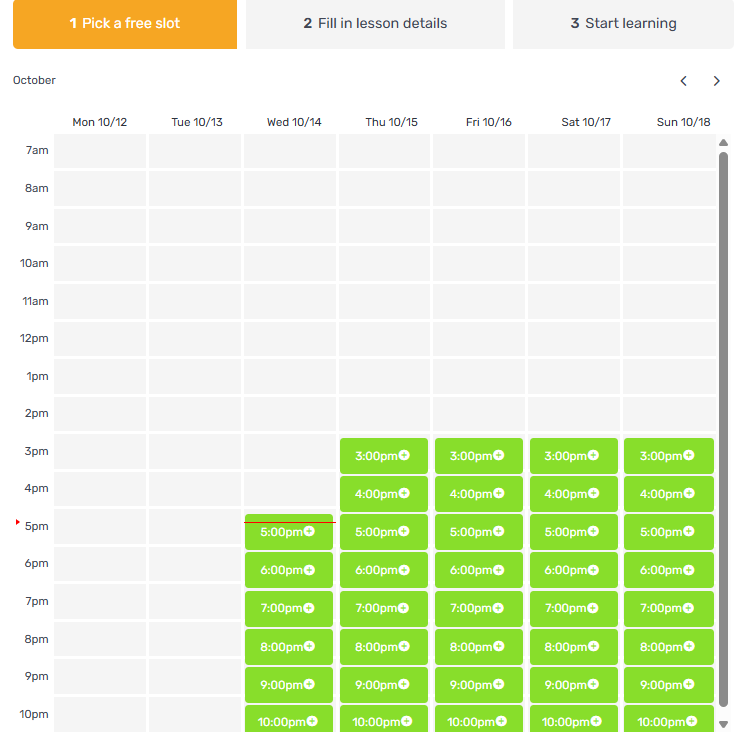
Dr. Steven Greene, a tutor in the Philadelphia area, shared how he began tutoring a student named Cathy in 2008. She was in 7th grade and had just moved to Florida with her mother, about 1,200 miles away. They started with basic math and science and kept going all the way through biology, chemistry, physics, pre-calculus and SAT and ACT prep. By the end of the first year every one of her grades had gone up, and she finished with only A's and B's. In 2014, Cathy was accepted to the University of Miami, her first-choice school. The remarkable part? They never once met in person.
Students in rural areas and small towns
One of the biggest advantages of online tutoring is that geography stops being a barrier. A high schooler in a small town in Montana whose school has one overstretched science teacher can work with a private physics tutor based in Boston, with no extra cost or travel time. For families who live far from a large pool of local tutors, this opens up options that simply didn't exist before.
Students with ADHD (with an important caveat)
For some students with ADHD, especially those whose attention difficulties are on the milder side, one-on-one online lessons can work well. When lessons are set up the right way, online has a few things going for it:
- Fewer outside distractions: at home, in a controlled setting, there's no classroom noise, no other students and no hallway traffic.
- Full one-on-one attention: the tutor focuses entirely on one student.
- Flexible breaks: it's easy to take a quick movement break when needed.
- Engaging digital tools: videos, images and interactive games can help hold attention.
- A steady routine: same time, same place, same tutor. That stability matters.
Important: it's not right for every student with ADHD
A 2020 study of US high schoolers found that during pandemic-era remote schooling, teens with ADHD had considerably more trouble learning from home than their peers, and that steady daily routines made a bigger difference for them. That was remote school rather than one-on-one tutoring, but the pitfalls carry over:
- The temptation to open another tab or check their phone
- More difficulty with independent work in front of a screen
- Hyperactive students who need constant physical movement
- Students who need a tutor physically present to stay on task
Our advice: book a first lesson and watch how your child responds. Experts recommend a distraction-free setup: the computer in a quiet spot, the phone in another room, and headphones on. Every student with ADHD is different, and what works for one may not work for another.
Students who need to learn at their own pace
Online lessons can be recorded, so students can rewatch tricky parts or pause an explanation to take notes. Say your child is working with a Spanish tutor: replaying a pronunciation drill or a tricky verb conjugation the night before a quiz is far easier than trying to remember it from a lesson that happened days ago.
Independent students
If your child can manage their time, stay focused without close supervision and take ownership of their learning, they're a great candidate for online lessons. The less formal setup works in their favor.
Students preparing for standardized tests (SAT, ACT, AP)
Test prep is a natural fit for online lessons. There's a huge amount of digital practice material, screen sharing makes it easy to work through problems together, and the flexibility allows for intensive study in the weeks before the exam. A student aiming for a 5 on the AP Chemistry exam, for example, can work through past free-response questions with a private chemistry tutor, both looking at the same document on screen.
Pros and cons: online vs. in-person tutoring
Here's how the two formats compare on the factors that matter most:
| Factor | Online lessons | In-person lessons | Edge |
|---|---|---|---|
| Cost | Often priced lower, since the tutor doesn't travel; no gas or commute for you | Rates often reflect the tutor's travel time | Online |
| Time saved | No travel; typically saves 1-2 hours a week | Includes travel time on one side or both | Online |
| Scheduling flexibility | Lessons at almost any hour; easy to reschedule | Depends on the tutor's availability and travel | Online |
| Choice of tutors | Tutors from anywhere in the country | Limited to tutors near you | Online |
| Digital tools | Screen sharing, recordings, online resources | Mostly physical materials | Online |
| Personal connection | Good, but through a screen; harder to read body language | Face to face, full interaction | In-person |
| Hands-on subjects | Hard for lab work, instruments, sports | Works for any subject, including hands-on activities | In-person |
| Younger kids | Often needs a parent nearby; focus can be harder | Better suited to young children; physical supervision | In-person |
| Learning environment | Depends on the home setup; distractions possible | A dedicated setting; easier to focus | In-person |
| Reliance on technology | Internet problems can derail a lesson; needs equipment | No tech dependency | In-person |
The bottom line: there's no single right answer. Online wins on flexibility, time and cost. In-person wins on personal connection, hands-on subjects and young children. The right choice depends on your child's specific needs.
How to make online lessons work: 7 proven tips
Want to make sure online lessons work for your child? These are the principles that matter most.
Set up the right learning space
- A quiet room with a door that closes
- A desk cleared of distractions (phone, games)
- Good lighting, natural light or a strong desk lamp
- A comfortable chair at the right height
- Supplies within reach: notebook, pens, calculator
- A good headset with a microphone
Test the tech ahead of time
15 minutes before every lesson:
- Make sure the internet connection is working and stable
- Check that the camera and microphone work
- Close any apps you don't need
- Have a backup ready (a phone or tablet) in case something fails
Nothing is more frustrating than a lesson that starts late because of a tech glitch.
Agree on clear ground rules
- No checking messages during the lesson
- No games or videos in the background
- Stay in one spot, no wandering around
- Speak up when something isn't clear
Encourage active participation
The best lessons are the ones where the student takes part. With a computer science tutor, for instance, the student can share their screen and run their own code while the tutor watches it break and helps fix it live.
- Ask questions, even in the chat if speaking up feels hard
- Share the screen to show their work
- Use the virtual whiteboard
- Sum up what they learned at the end of each topic
Make the most of the format
- Record lessons (with the tutor's permission) for review
- Set up a shared folder in Google Drive for materials and homework
- Use online resources like practice sites and explainer videos
- Practice together with your child when needed
Stay in touch with the tutor
- Send a message if there's a problem or a question
- Ask for regular progress updates
- Share news about upcoming tests or challenges at school
- Keep communication open and ongoing
Take breaks
Long stretches of screen time can be tiring. If a lesson runs longer than an hour, suggest a 5-minute break in the middle. A short break improves focus and makes the lesson more productive.
Online tutoring on Tutorela
Tutorela is the international, US-focused marketplace built by the team behind Limud Naim, one of Israel's leading platforms for finding a private tutor. When Roey Naim and Yaakov Yermolovsky founded Limud Naim, they noticed a real gap: students outside the big cities struggled to find strong tutors, and the most experienced tutors were concentrated in a few metro areas.
In 2015 they started offering online lessons, long before it was common. "It wasn't easy," Roey Naim recalls. "We had to teach tutors the technology, there was a lot of skepticism about online lessons, people were afraid of having to install things, and many thought it couldn't be as effective as meeting in person." Growth was slow: until 2020, only about 10% of lessons on the platform were online.
Then the pandemic hit, and the early investment in online lessons paid off. "The infrastructure we'd built helped a lot of students keep learning and a lot of tutors keep earning," says Naim. "Many new tutors and students joined during that period, because they saw it worked." Today, about half of the lessons on Limud Naim happen online. That experience is what we're bringing to Tutorela.
Our track record (Limud Naim, Tutorela's sister platform)
500,000+
lessons arranged
15,000+
approved tutors
15+ years
matching students with tutors
How to find an online tutor on Tutorela
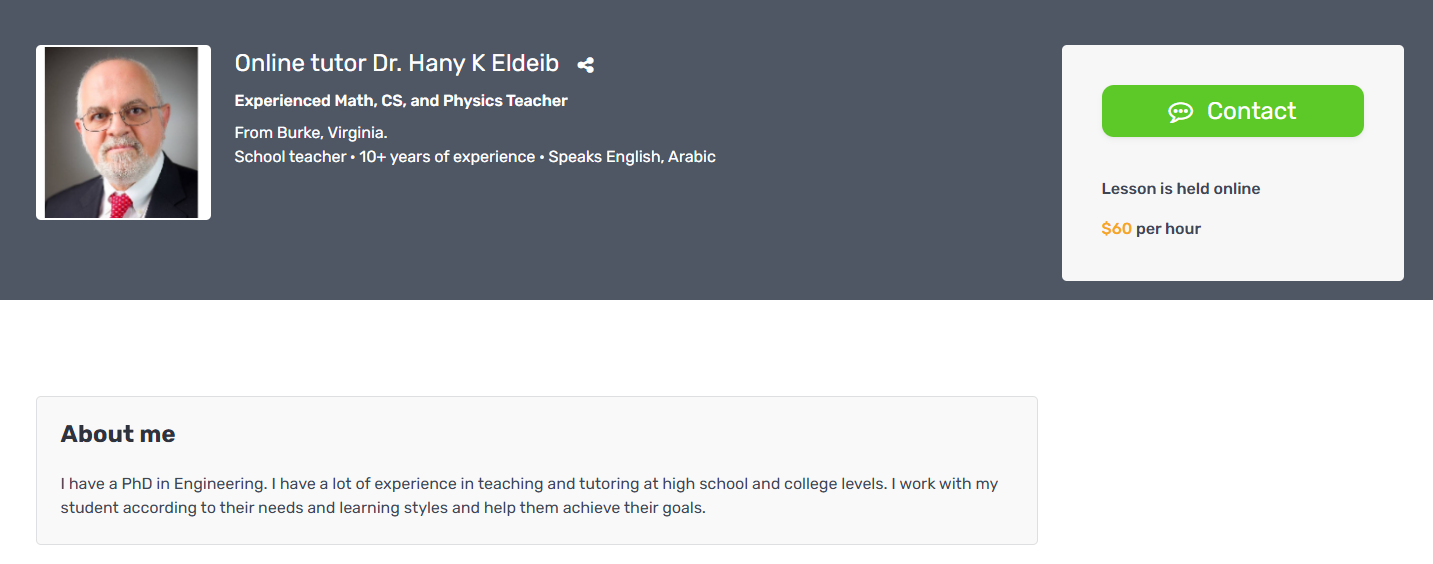
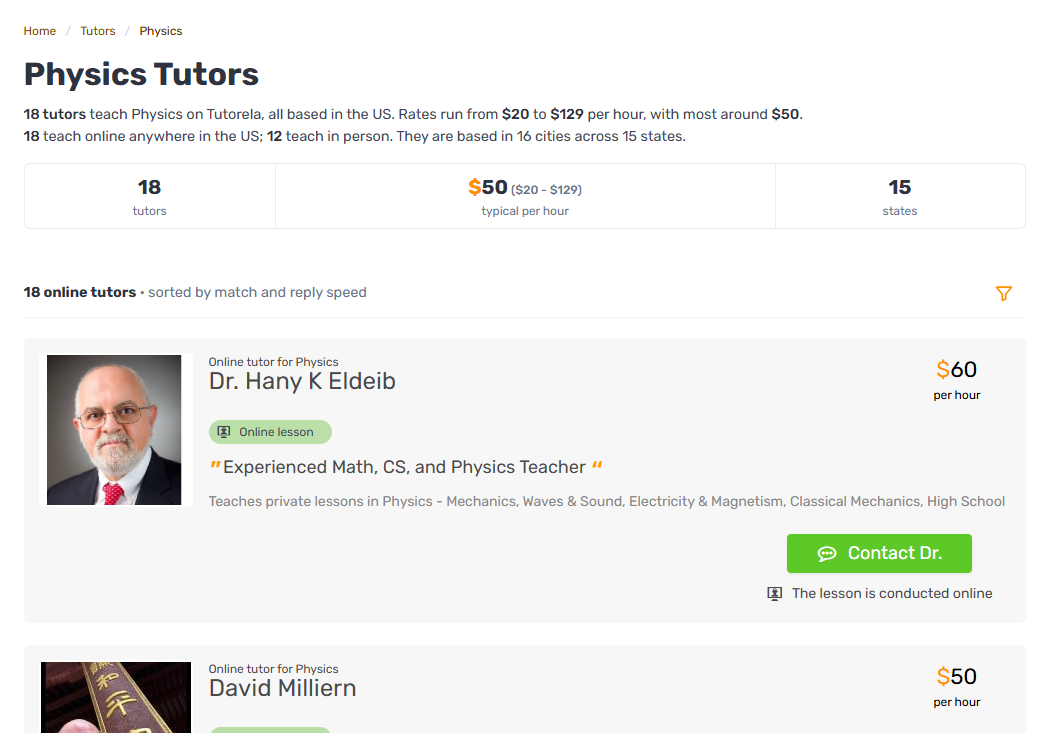
- Start a search: go to Find a Tutor and use the new subject navigation to get to the right subject and level.
- Narrow it down: look for tutors who teach online.
- Read the reviews: look for ones that mention online lessons specifically.
- Check experience: make sure the tutor has taught online before.
- Reach out: message a few tutors, ask your questions and book a first lesson.
The bottom line: how to make the right call
Online tutoring is a powerful tool, but it isn't right for everyone. In short:
Choose online lessons if
- Your child is 12 or older and can focus reasonably well
- You want flexibility in timing and location
- The subject is mostly conceptual (math, languages, sciences, writing)
- You want to save time and travel
- You have a quiet space and a stable internet connection
Consider in-person lessons if
- Your child is young (under 10) or needs close supervision
- The subject is hands-on (lab-based chemistry, music)
- Your child has serious difficulty focusing or is easily distracted
- You don't have a quiet space or reliable internet at home
- You value a strong personal connection and in-person interaction
Searching for a tutor in your city? Online tutors show up there too
Many families start with a local search, often because they want a tutor who knows what's taught where they live: their school's curriculum, their state's standards and the tests that come with them. That's why Tutorela's local pages, like private tutors in Boston, include online tutors alongside tutors who teach in person. What matters for curriculum fit is what the tutor knows, not where they sit, so an online tutor who already teaches your state's standards or the AP course your child is taking can be just as good a match as someone down the street. When you reach out, ask which curriculum and tests they work with.
Our best advice: try it. Book a first lesson, let your child experience it, and see how they feel and respond. That's the surest way to decide. What matters most is that your child learns, succeeds and enjoys the process, whether that happens through a screen or face to face.
Looking for an online tutor?
Free to search and free to contact. Browse tutors by subject and level, and see who teaches online.
Frequently asked questions about online tutoring
Is online tutoring a good fit for a 5th grader?
It depends on the child. Many 10- and 11-year-olds do well with online tutoring, especially with a parent nearby for the first few lessons. Younger children, or kids who find it hard to focus, usually do better in person. The simplest way to find out is to book a first lesson and see how your child responds.
How long should an online tutoring lesson be?
For elementary and middle school students, an online lesson of 45-60 minutes usually works well. High school students can handle 60-90 minutes. Screen time is tiring, so two shorter lessons a week often work better than one long one.
What equipment does a student need for online tutoring?
The basics for online tutoring are a computer or tablet with a camera and microphone, plus a stable internet connection (10 Mbps or faster). A headset with a microphone, a screen bigger than a phone, and a mouse and keyboard make lessons easier. For math and science, a drawing tablet is a nice extra for writing out problems.
Is online tutoring cheaper than in-person tutoring?
Often, but not always. Tutors who teach online don't spend time traveling, so some charge a little less for online lessons, and families save the commute either way. Rates vary with the subject, the level and the tutor's experience, so compare a few profiles, and keep in mind that price alone says little about fit.
How can parents tell if a private tutor is good at teaching online?
Ask the tutor how long they've been teaching online, which tools they use and what they do when the connection drops. If the tutor has reviews, look for ones that mention online lessons. Then book a first lesson: it's the clearest test of fit, and preparing your child for that first lesson helps it go well.
What should you do if there's a tech problem during an online lesson?
Agree on a backup plan with the tutor before the first lesson: a phone number to call, a second platform to switch to (for example, Google Meet if Zoom isn't working) and what happens if the lesson can't continue. It also helps to ask up front how they handle time lost to technical problems.
Can a student combine online and in-person tutoring?
Yes. Many families use a hybrid setup with the same tutor: most lessons online to save time, with an in-person session every few weeks for harder topics or to strengthen the relationship. Some tutors on Tutorela teach both ways, which makes this easy to arrange.
How can a child stay focused during an online tutoring lesson?
A quiet room without distractions, a short break about every 45 minutes and a clear goal for each lesson, such as finishing one topic, all help. A good tutor also keeps the student involved by asking questions instead of lecturing. And celebrating a successful lesson goes a long way.